


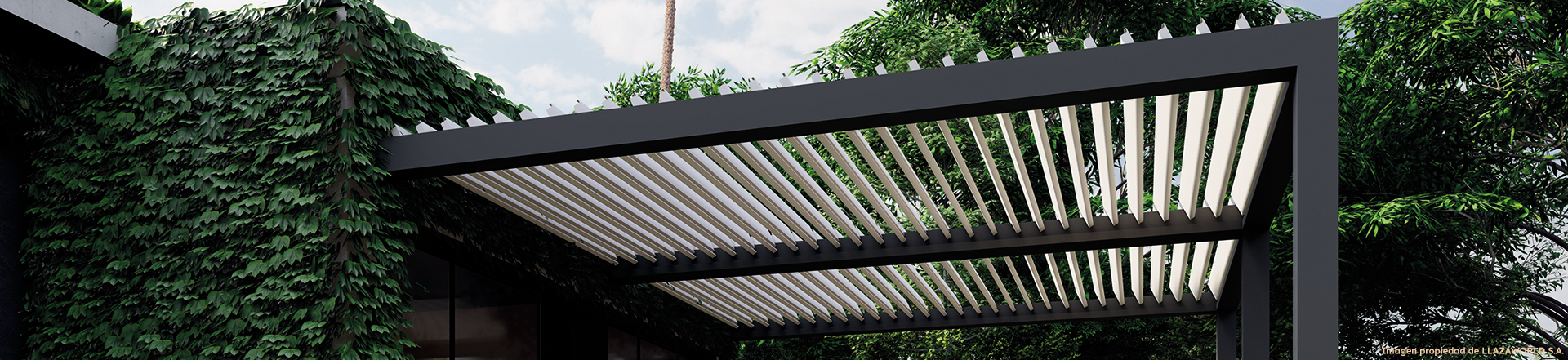
Bioclimatic Pergolas


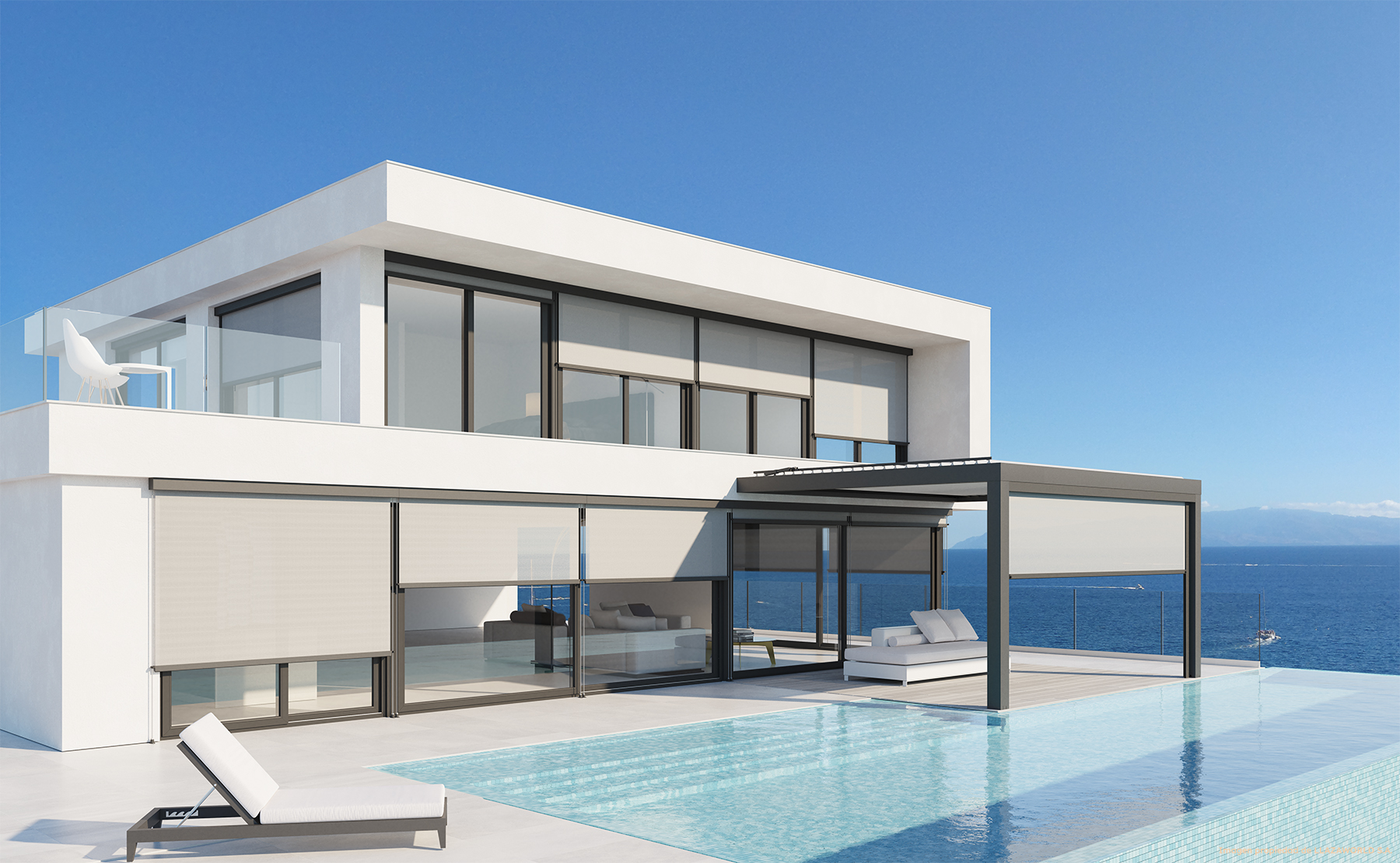

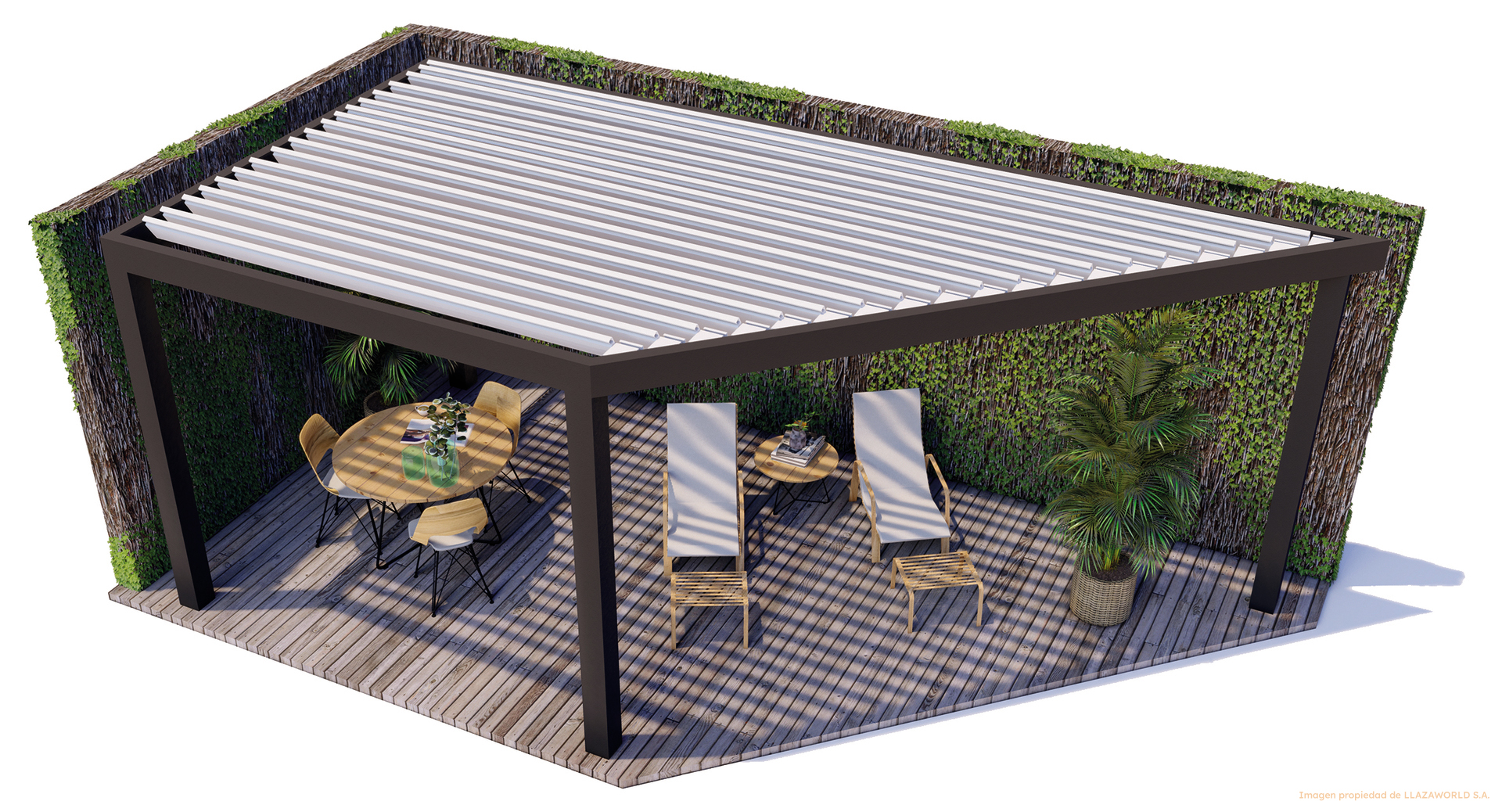

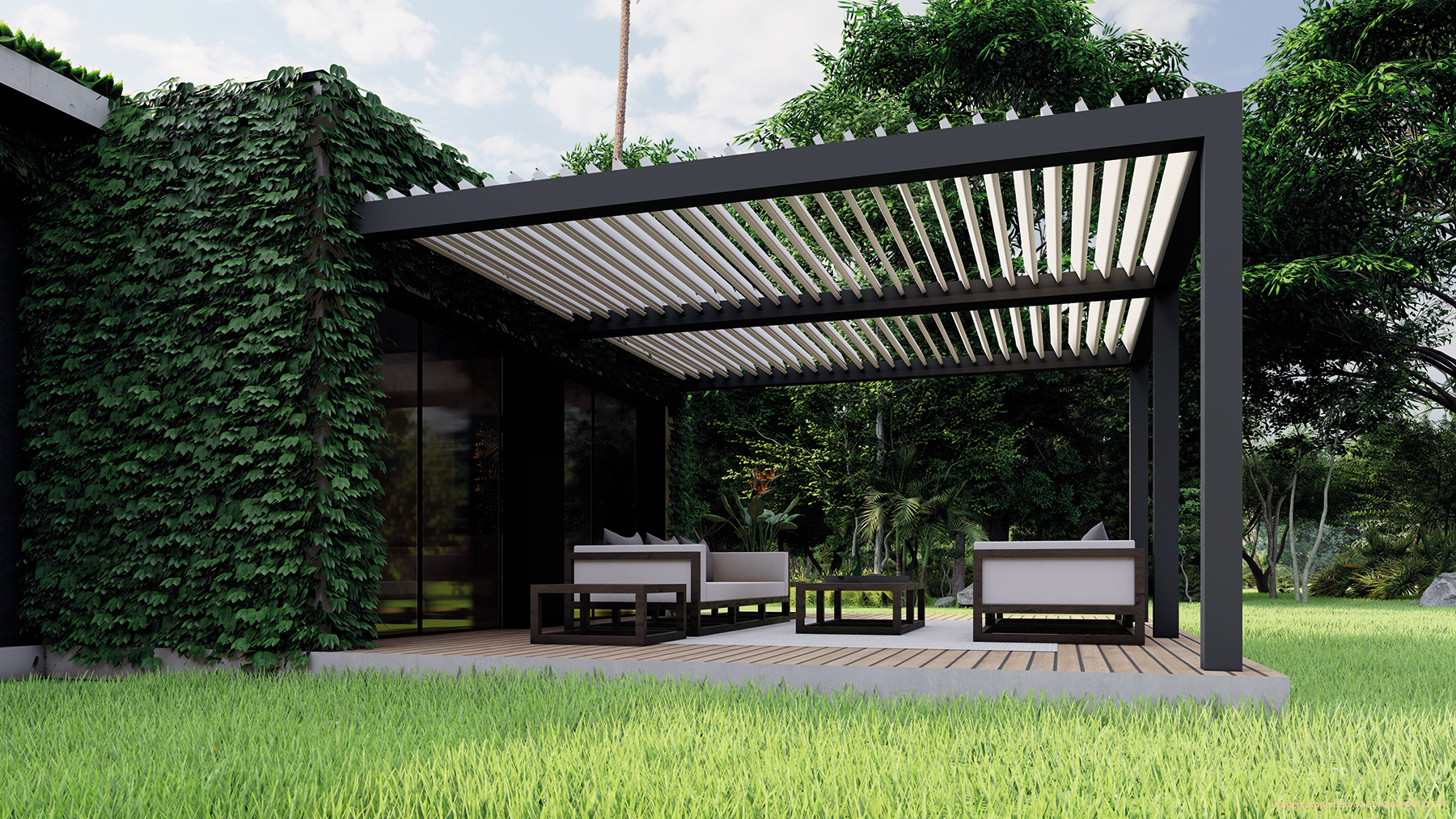
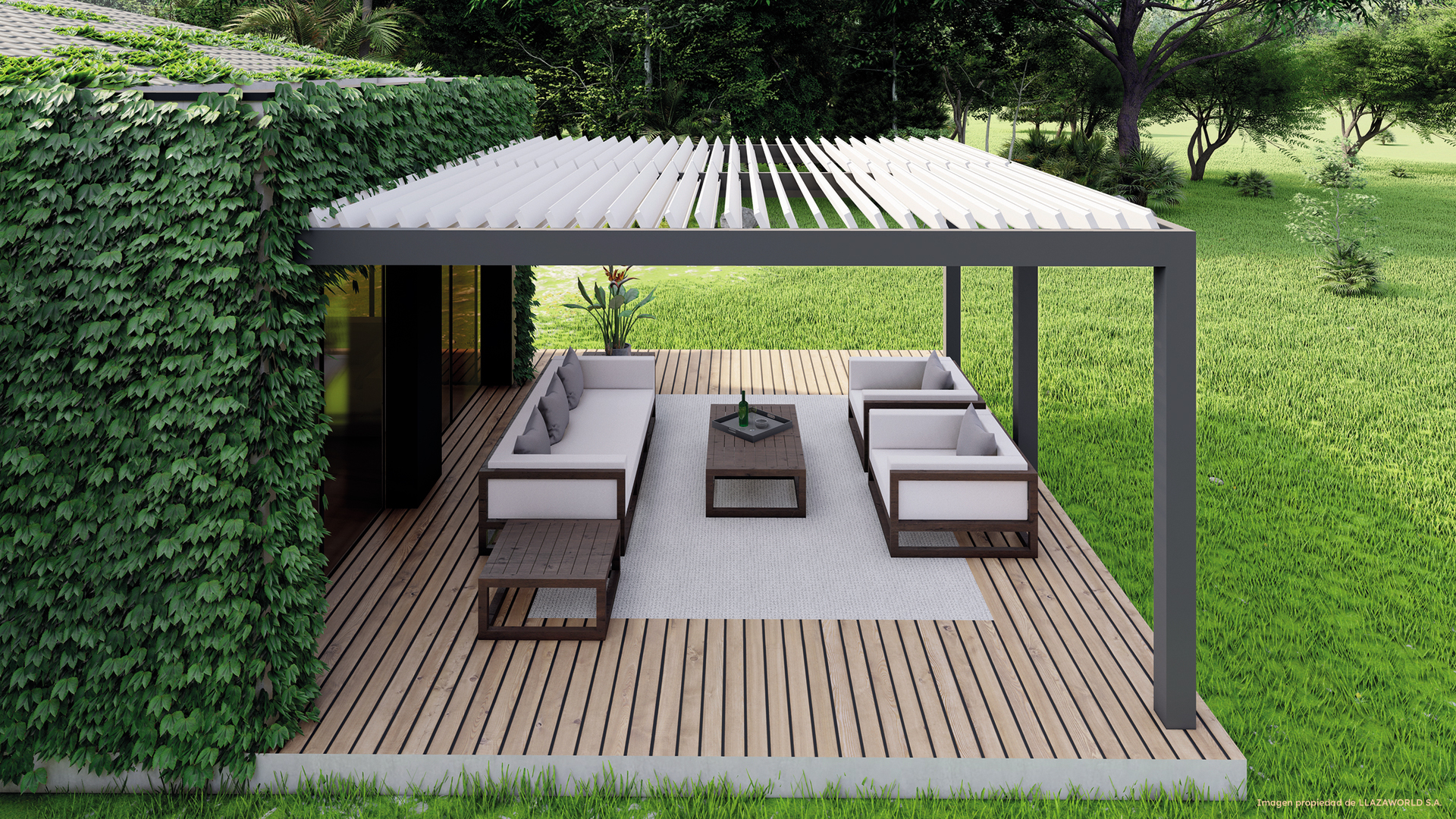
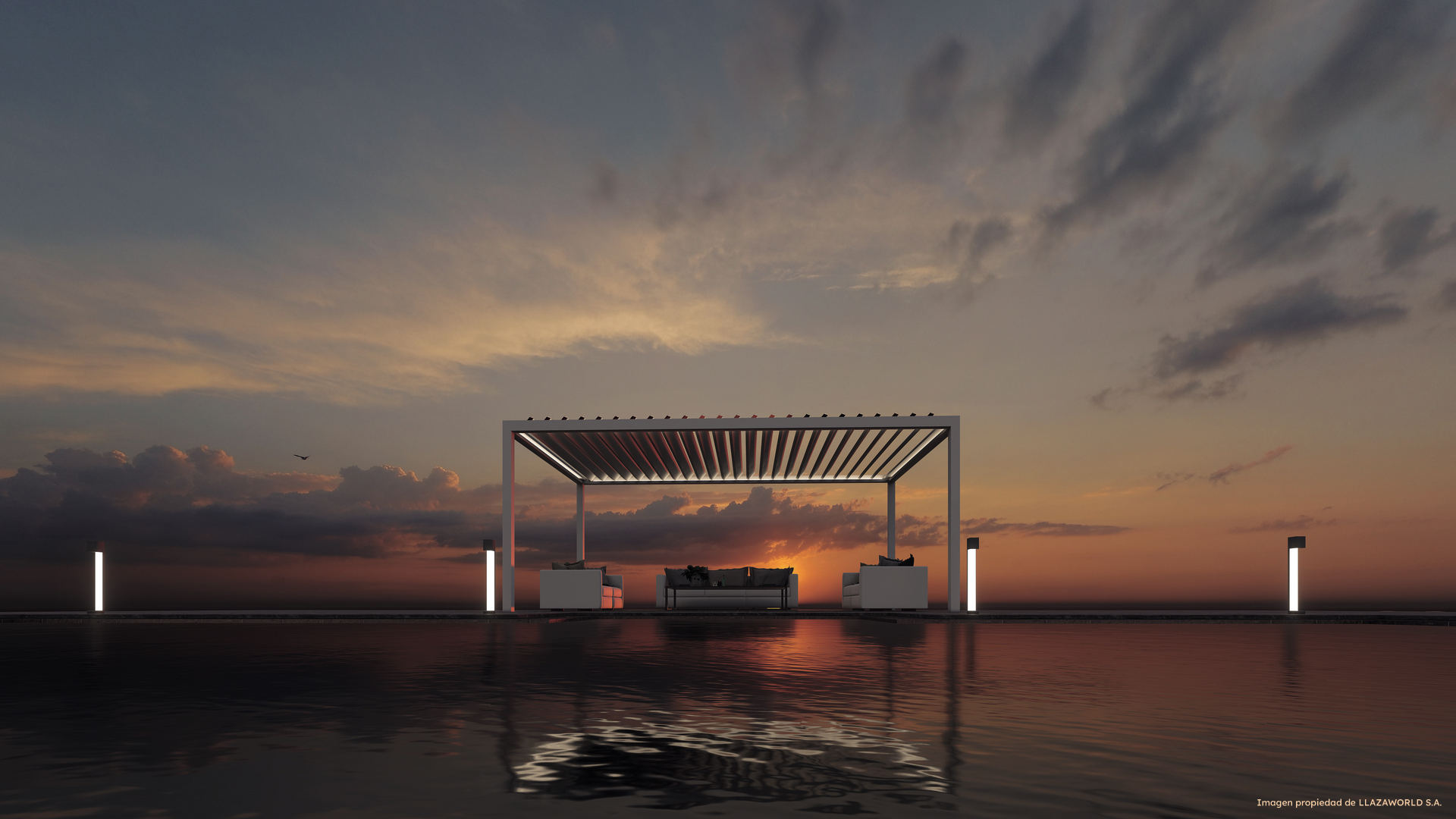
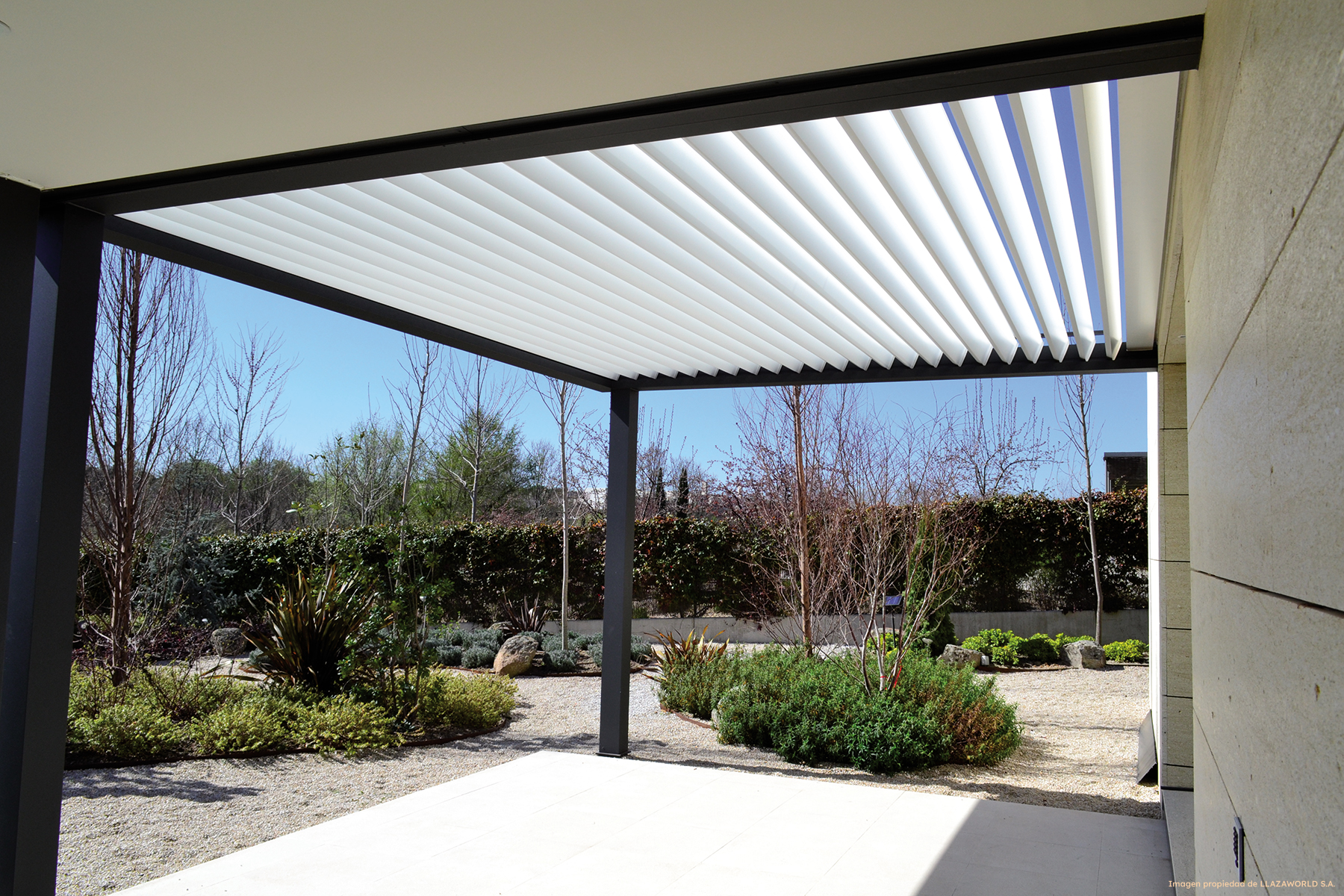
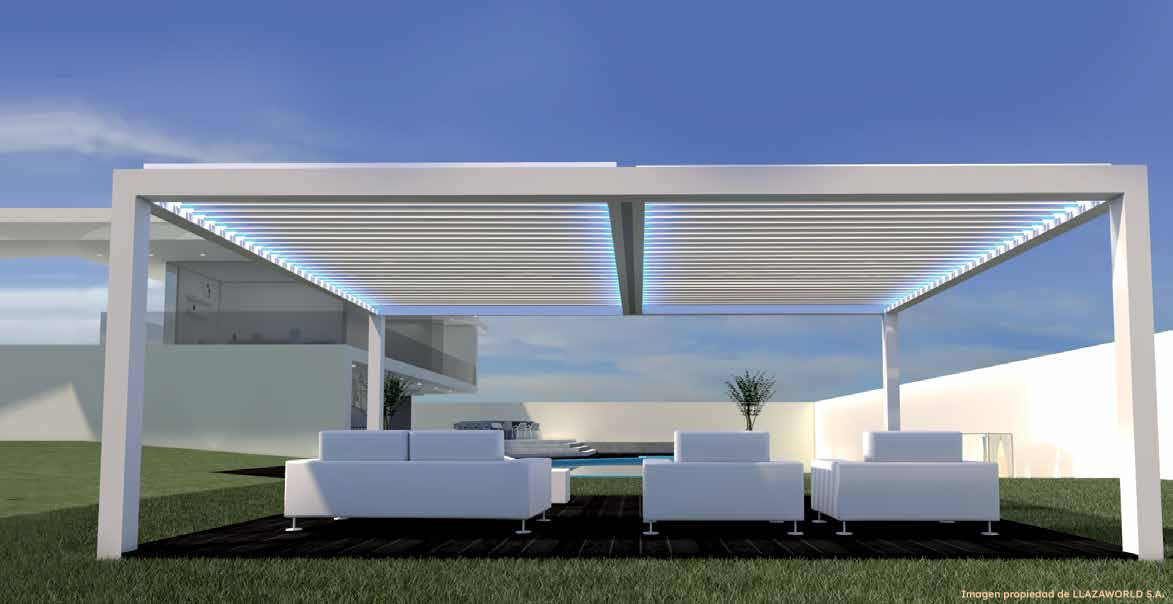
At ELUHA we know that the feeling of protection is one of the basic needs for people. We all like to feel protected and at the same time enjoy the freedom that life offers us outdoors.
Bioclimatic canopies are designed to make the most of the garden or terrace throughout the year, both day and night, enjoying evenings full of unrepeatable moments. With them we can expand and create new spaces in our homes or businesses without the need for endless and annoying works.
Why choose bioclimatic canopies?
QUALITY AND TRUST
Our main objective is to achieve an efficient, safe and affordable product. Bioclimatic canopies provide comfort and the highest quality to live the best experiences feeling protected.
CUSTOM PRODUCT
We manufacture each bioclimatic to the exact measurement and with all the accessories that make each project unique. As it is a carefully manufactured product, we can adapt the projects to any architectural requirement.
At ELUHA (eluha.es), we understand this perfectly: the feeling of protection is a basic need. We like to feel sheltered… but without sacrificing the freedom that comes from living outdoors, with the garden or terrace as “another room” of the house. And if anything fits the Marbella lifestyle (and the Costa del Sol in general) perfectly, it’s bioclimatic pergolas: shade when needed, ventilation when desired, and an outdoor space that can be used all year round, day and night, without the hassle of lengthy construction projects.
We specialize in the installation and maintenance of bioclimatic pergolas in Marbella and the surrounding areas: San Pedro de Alcántara, Benahavís, Estepona, Fuengirola, and Sotogrande. Our guiding principle is to deliver efficient, safe, and affordable results, with a custom finish that makes sense for your home or business.
Marbella has many sunny days (and many days when you just want to be outdoors), but it also has its share of wind, humidity, temperature changes in the late afternoon, and, occasionally, rain that catches you with the table set. That’s where a bioclimatic pergola stops being “a whim” and becomes a comfort solution.
In our case, we explain it like this: we want to feel protected without feeling “enclosed.” A bioclimatic pergola achieves that balance because it doesn’t force you to choose between an “open terrace” or a “closed terrace.” It gives you control, and that makes a difference every day: breakfasts in sunlight without scorching, meals in real shade, afternoons with natural ventilation, and evenings with an incredible ambiance when you add well-designed lighting.
The best part is that, when well-designed, a pergola expands the size of a home or business: it transforms an outdoor space into a truly usable area, without months of dust, noise, and endless construction. For a penthouse, a house with a garden, or a restaurant, it’s practically like gaining “living” square footage, but with the advantage that the outdoors remains outdoors.
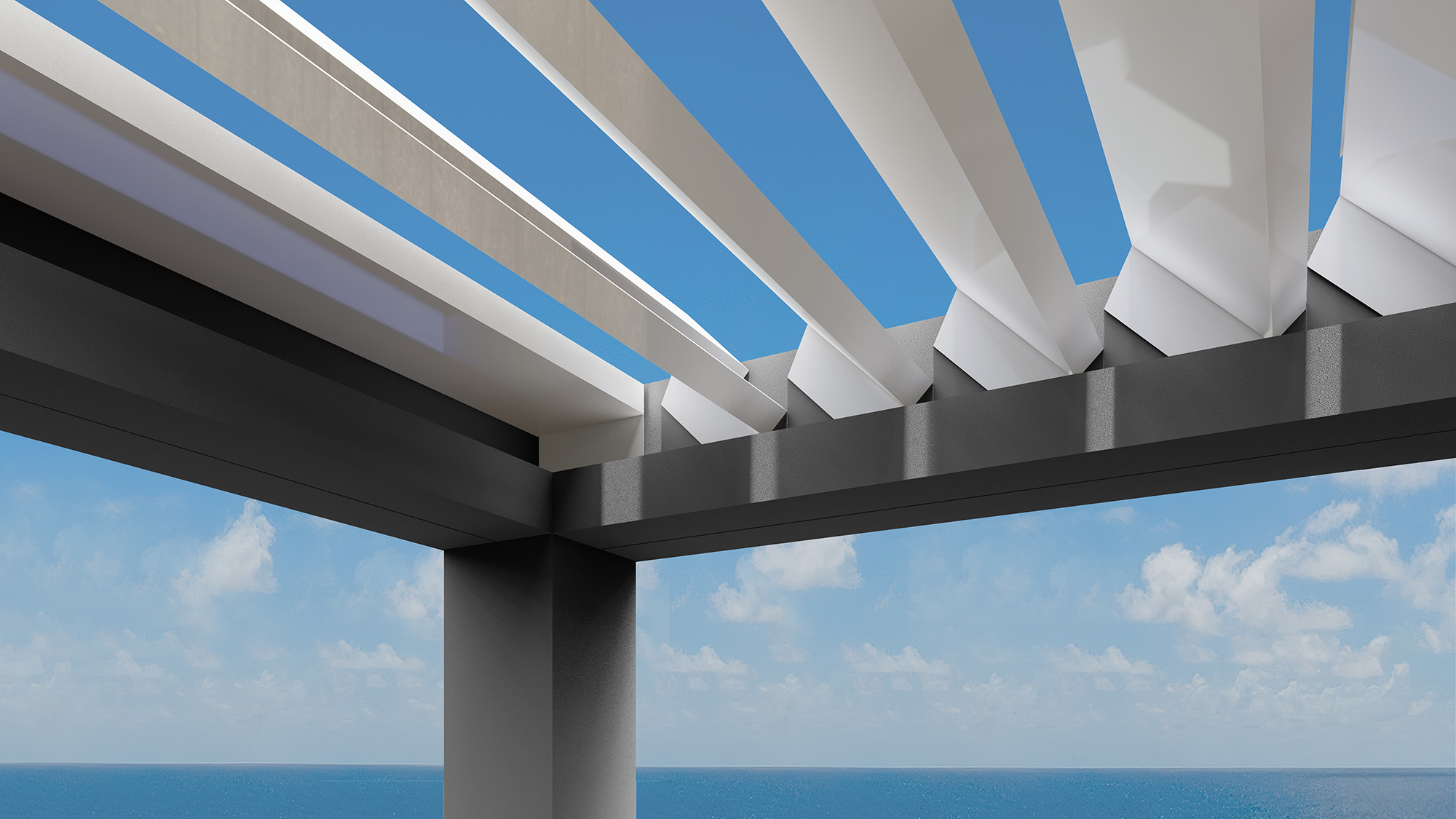
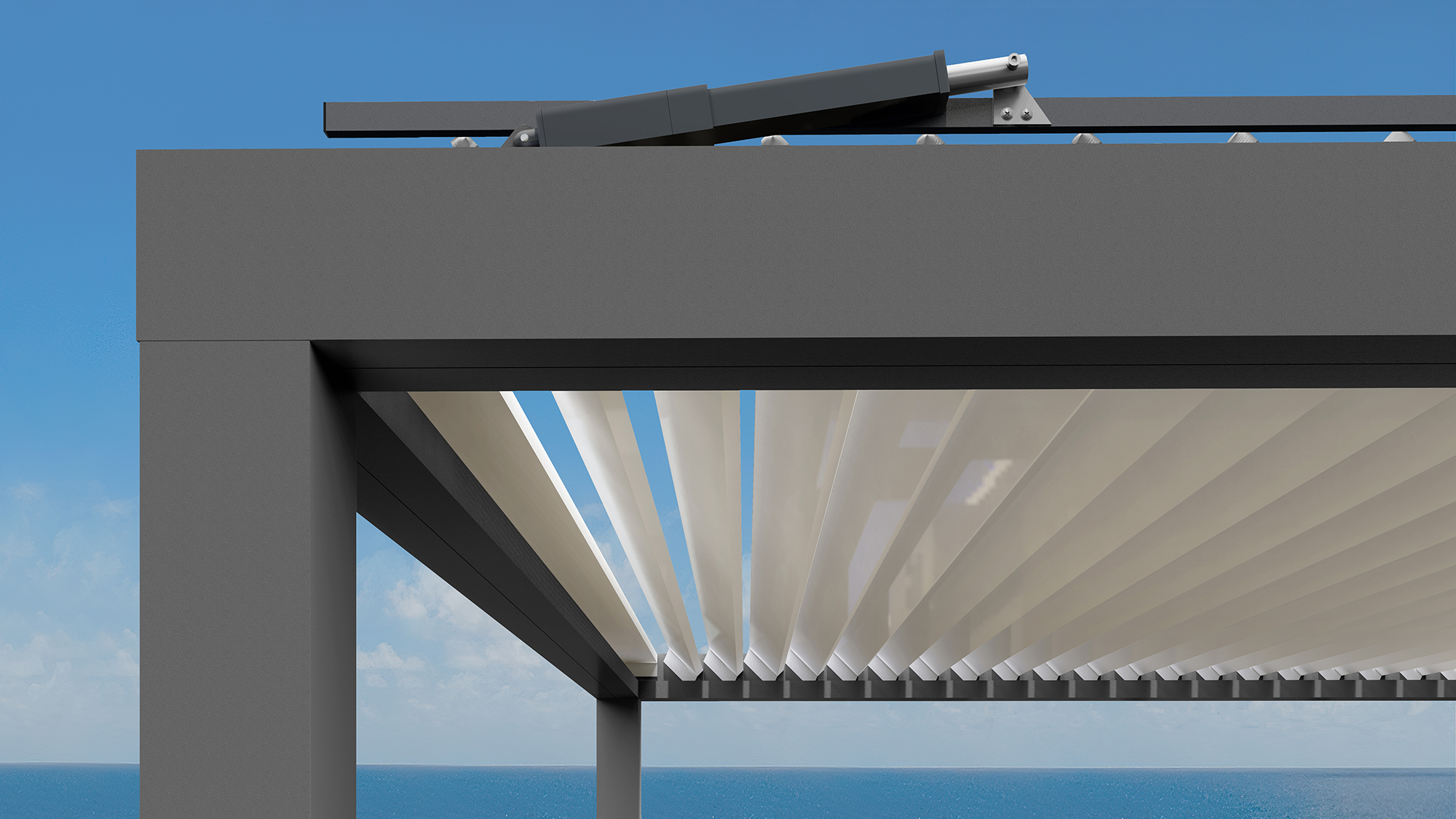
The beauty of a bioclimatic pergola lies in its adjustable louvers. It’s not just about “providing shade”; it’s about regulating how much sunlight enters, how the air flows, and the resulting temperature. In an area like Marbella, this is invaluable: when the sun is strong, we close the louvers to create shade; when we want a breeze, we adjust them for ventilation; and when it rains, the system (when properly installed) helps drain the water away.
Furthermore, a bioclimatic pergola integrates beautifully into modern architecture as well as more classic styles. And if we have it custom-made, respecting lines, heights, and materials, it looks as if it’s been there since day one.
To understand a bioclimatic pergola, you don’t need to get technical: it’s supported by three pillars.
On the Costa del Sol, there’s an extra factor: the environment (salt air, humidity, airborne dust) makes maintenance incredibly important. We’re not talking about constantly hovering, but rather about carrying out inspections and cleanings at the right times to keep the mechanism and finishes in perfect condition.
The big question: manual or motorized? Our recommendation is usually practical:
In Marbella and the surrounding area, we see many clients who initially consider a manual pergola, but when they imagine using it every day, they switch to a motorized one because the difference in convenience is significant. And if you’re also going to add lighting or side enclosures, having a central control system is usually a plus.
In terms of configuration, almost everything stems from this decision:
In Marbella businesses (restaurants, beach clubs, boutique hotels), we often see freestanding pergolas because they allow for the creation of distinct areas and the relocation of the “center of life” to the most convenient location. In homes, the attached pergola fits perfectly to “add” an interior space without losing that outdoor feel we love so much.
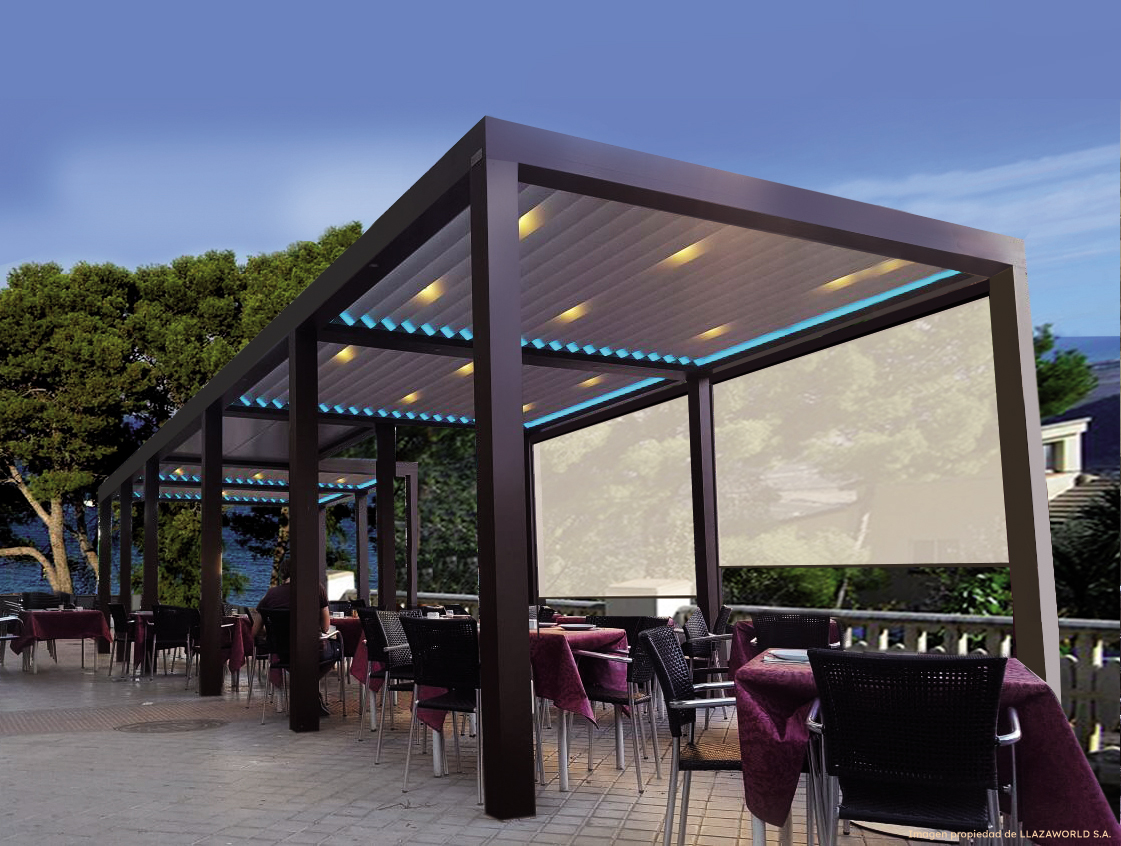
This is where it becomes a year-round solution: the side enclosures. They aren’t always necessary, but when they fit, they elevate the project.
At ELUHA, we believe in this: every project is unique, and that’s why we manufacture and install custom solutions, with accessories that make it truly yours. There are terraces in Benahavís where the wind dictates and the side view is key; there are penthouses in Marbella where privacy is paramount; and there are areas in Sotogrande where design and architectural integration are everything.
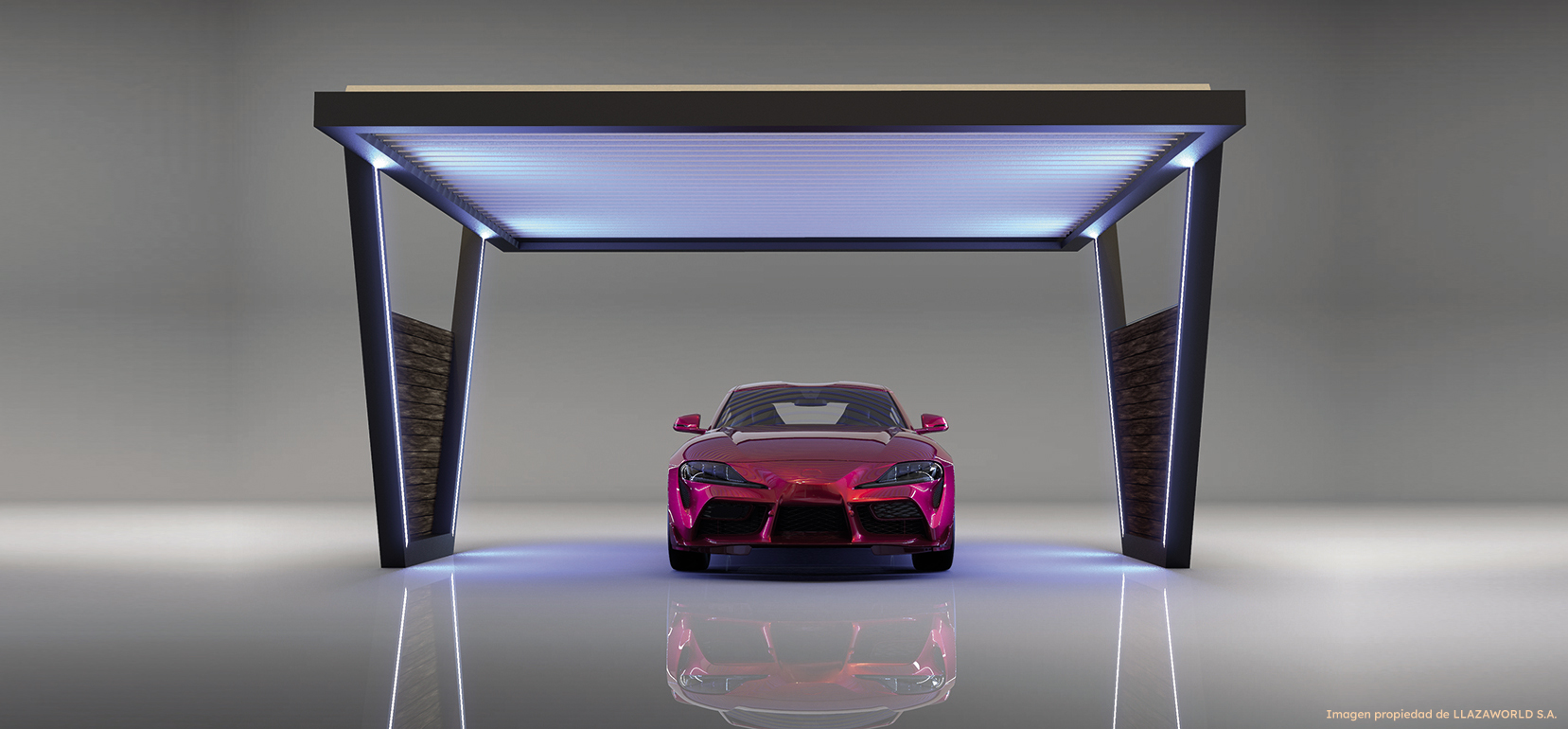
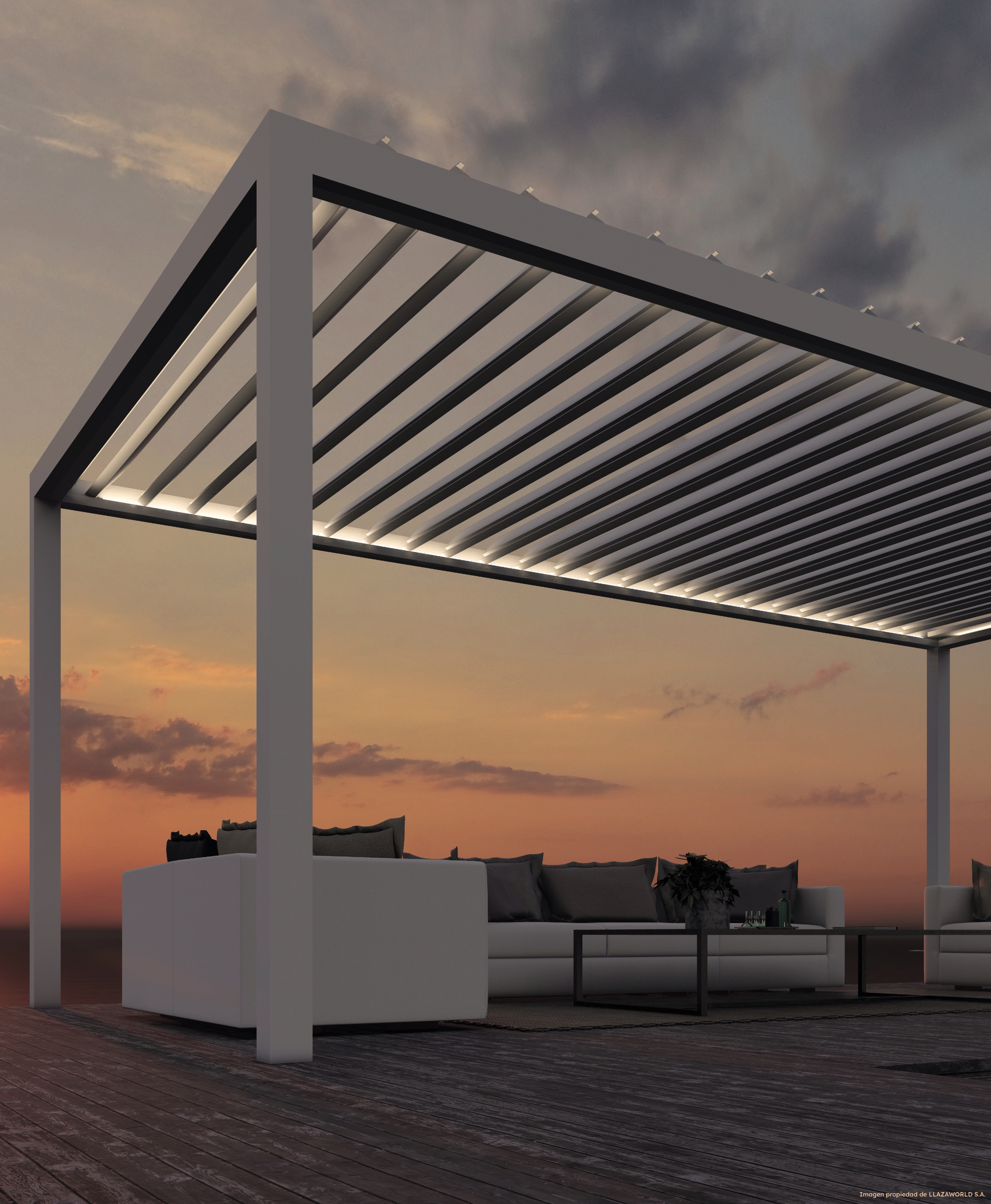
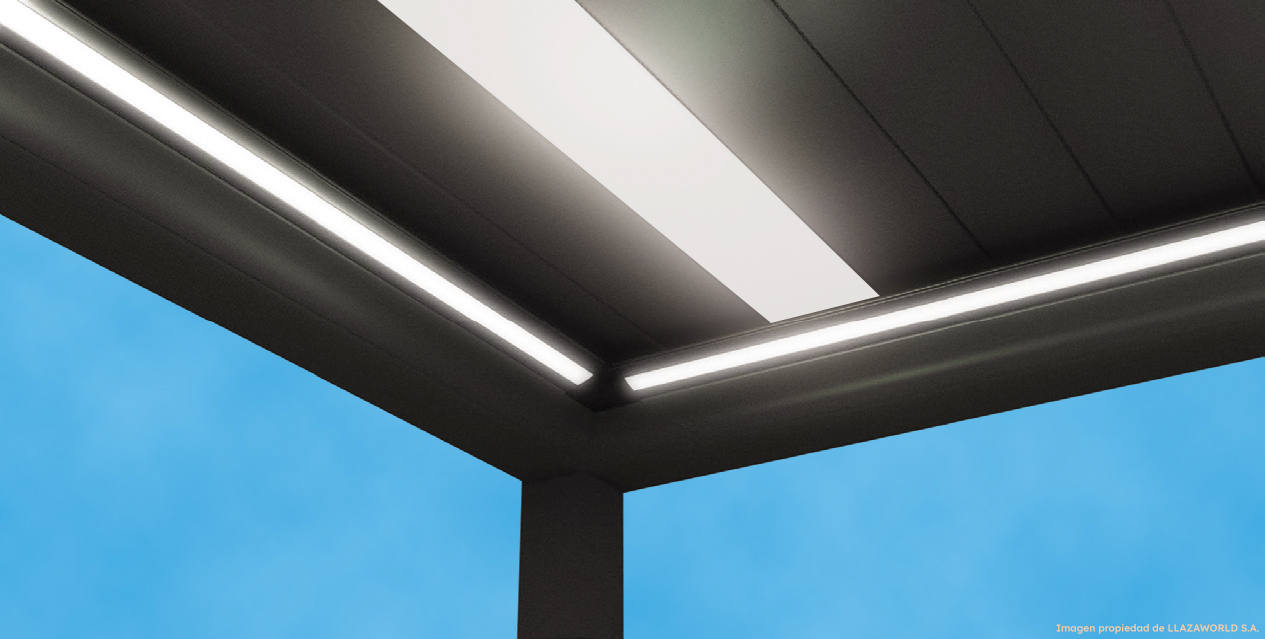
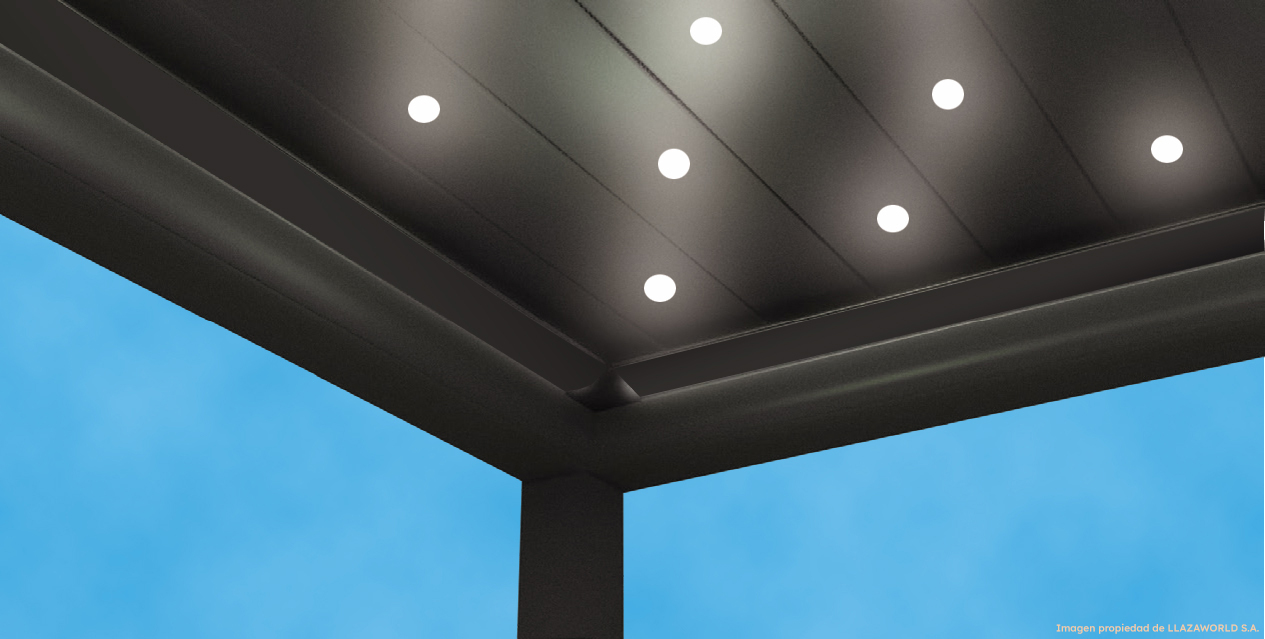
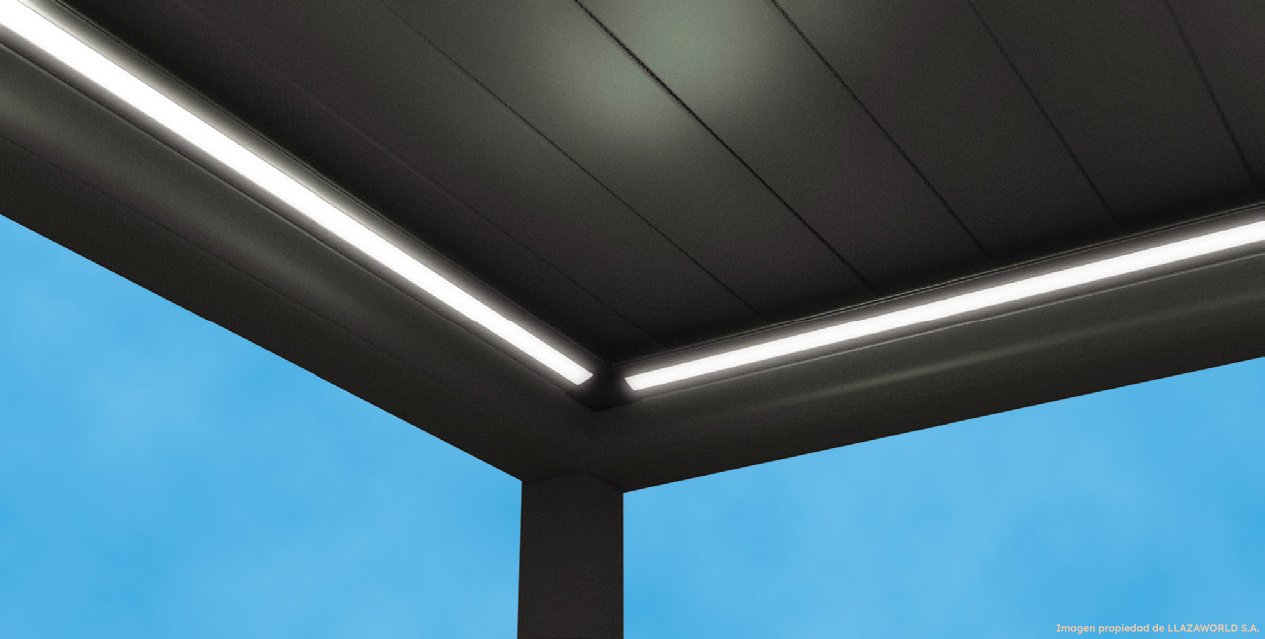
Bioclimatic design isn’t limited to the “daytime.” With well-planned LED lighting, dinners, evenings, and moments you never want to end suddenly appear. And that’s precisely the point: to enjoy the outdoors at night without losing the feeling of shelter.
Typical extras we recommend depending on use:
The important thing is to prioritize: first, the structure, installation, drainage, and perfect louvers; and then the extras you’ll actually use.
A well-installed bioclimatic pergola is noticeable in three things: how it opens/closes, how it sounds (or doesn’t sound at all), and how it ages. And that starts before the first screw is tightened.
In Marbella and the Costa del Sol, we typically analyze:
This phase is where 90% of problems are avoided: if everything is measured and defined, the installation goes as planned and the result is impeccable.
This is where we like to emphasize: a custom-made product is not “cutting down a standard size.” It’s designing the project with the exact dimensions and the right accessories so that it fits seamlessly with the architecture, without any unusual compromises.
There are homes in Marbella with very clean lines where a pergola should look like part of the original design. There are renovations in Estepona where we need to adapt to specific heights. And there are terraces in Fuengirola with space constraints where every centimeter counts.
Our goal is always the same: an efficient, safe, and affordable product, but above all, one that is coherent with the space and designed to last. And yes: the more precisely everything is done from the beginning, the fewer “surprises” appear later.
If there’s one thing that sets the Costa del Sol apart, it’s the environment. Salt spray, humidity, dust, and continuous use (especially in businesses) make maintenance a small investment compared to what it protects.
We approach it as “smart maintenance”:
When a pergola is well-maintained, it shows in how easily we use it: it opens, closes, adjusts, and “disappears” as a problem. And that’s precisely what we want: for the outdoors to be a source of enjoyment, not a worry.
There are typical symptoms that tell us a check-up is necessary:
The good news: it’s almost always fixed with a timely tune-up and professional cleaning. What we don’t recommend is putting it off, because small problems can become major.
Our main focus is Marbella: homes, penthouses, gardens, porches, and hospitality projects. We also work extensively in San Pedro de Alcántara, where outdoor living is key, and a bioclimatic pergola is a particularly good fit when comfort and aesthetics are desired.
Here, we typically see two clear needs:
In all cases, the goal is the same: for the pergola to provide comfort, expand usable space, and make us feel protected… without sacrificing the freedom of being outdoors.
The million-dollar question: “How much does a bioclimatic pergola cost in Marbella?” The real answer is: it depends on what you want and where it will be installed. The most influential factors are usually:
We work with one principle: that the project be safe and high-quality, but also affordable and suitable for its intended use. If the goal is to use it year-round, we prioritize what truly matters in daily life (slats, drainage, flawless installation, and maintenance) before adding extras that might not be needed.
To give you a reliable quote (not just an estimate), we need:
With this information, we can propose a realistic solution tailored to your space, which is precisely the beauty of a bioclimatic pergola: custom-made.
Is a bioclimatic pergola suitable for rain?
Yes, if it’s properly installed and has correct drainage. When the louvers close, the water is channeled to the drain.
What maintenance does it require on the Costa del Sol?
We recommend cleaning and preventative maintenance. The environment (salt air/humidity/dust) means it’s important to keep the channels and louvers in good condition so everything works smoothly.
Attached or freestanding: which is better?
There’s no single “best” option. An attached enclosure integrates very well with the house; a freestanding enclosure gives you complete freedom of placement (garden/pool/separate areas).
Can lighting or side panels be added later?
In many cases, yes. Even so, we like to plan it from the beginning so the design and installation are perfect.
Motorized or manual?
If you’re going to use it daily (especially in Marbella), motorization is usually worthwhile for convenience. Manual operation might make sense for smaller sizes or occasional use.
Do you work outside of Marbella? Yes: the Costa del Sol, especially San Pedro de Alcántara, Estepona, Fuengirola, Benahavís, and Sotogrande.
A well-designed bioclimatic pergola does something very simple yet very powerful: it allows us to feel sheltered while still enjoying the outdoors freely. In Marbella, where gardens and terraces are enjoyed for many months of the year, it’s an investment that makes a noticeable difference in quality of life (or in the customer experience, if we’re talking about businesses). And if we also have it custom-made, professionally installed, and sensibly maintained, the result is a new space that you’ll use more than you imagine.

